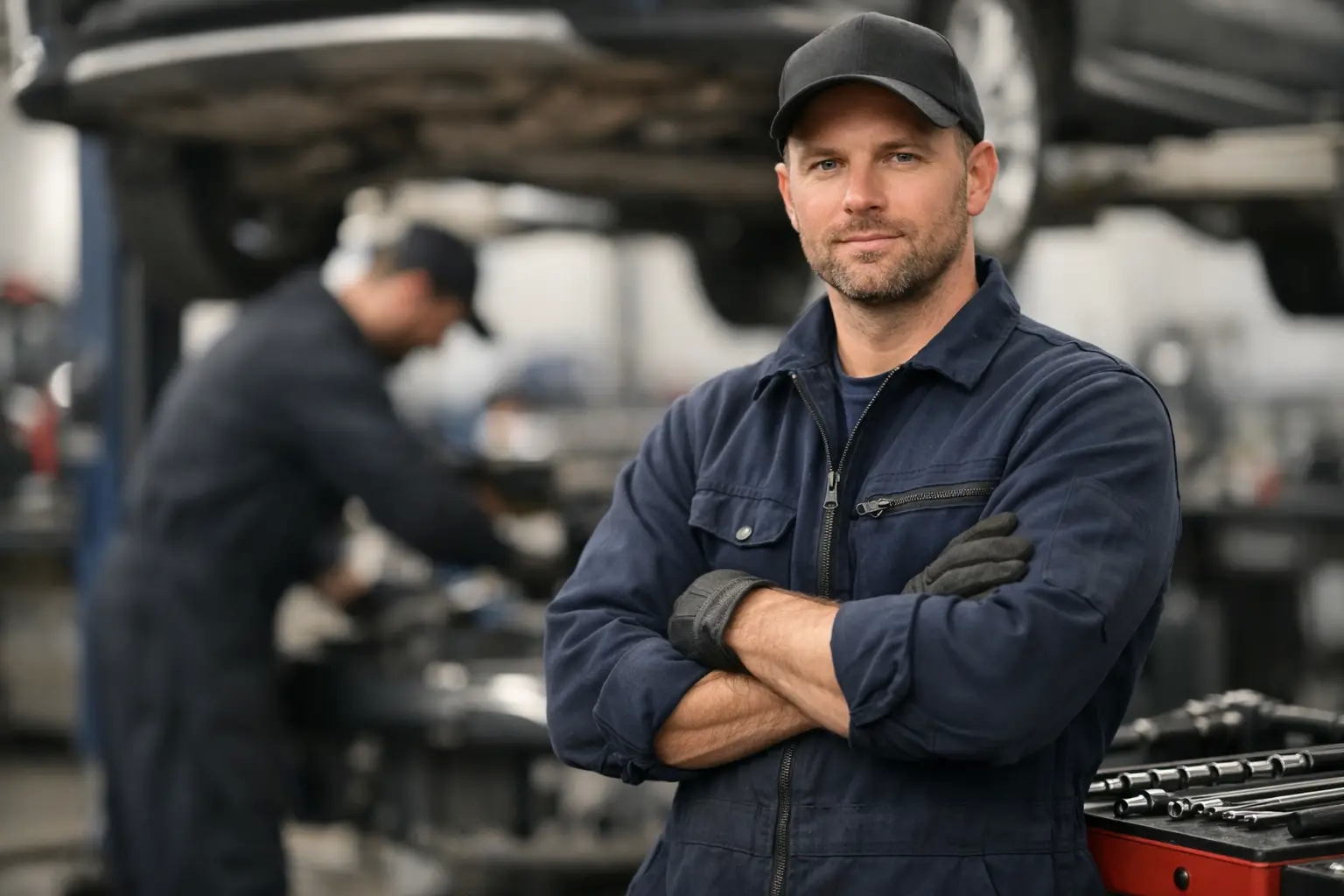
A torn knee, a blown-out zipper, and sleeves that catch every sharp edge in the bay usually tell the same story - the wrong garment was bought for the job. Mechanic coveralls for work are not just about looking uniform on the floor. They need to handle grease, abrasion, frequent washing, bending, reaching, and long shifts without slowing the wearer down.
For shop owners, dealership administrators, and buyers managing uniform programs, the right coveralls also affect replacement cost, team consistency, and day-to-day comfort. For individual technicians, the difference is even more direct. If the coverall binds at the shoulders, runs hot, or wears through too fast, it becomes a problem by the end of the week.
What mechanic coveralls for work need to do
In automotive, fleet, diesel, and maintenance environments, coveralls have a straightforward job. They protect the worker's clothing, present a professional appearance, and hold up under repeated use. That sounds simple, but performance depends on details.
Fabric weight matters because mechanics need a balance between durability and comfort. A heavier fabric usually stands up better to abrasion and repeated laundering, but it can also feel stiff or overly warm in a hot shop. Lighter blends improve mobility and airflow, but they may not last as long in high-contact areas like knees, elbows, and seat panels. There is no one right answer for every facility. A climate-controlled dealership service department may need something different than a heavy truck shop or industrial maintenance crew.
Construction matters just as much as fabric. Strong seams, bartacks at stress points, two-way front zippers, and reinforced pocket openings all make a difference over time. Mechanics kneel, crouch, slide under equipment, and reach overhead all day. A coverall that looks fine on a hanger can fail quickly if the pattern is too restrictive or the stitching is not built for movement.
Choosing fabric and finish
Most mechanic coveralls for work fall into a few practical fabric categories. Polyester-cotton blends are common because they balance durability, color retention, and easier care. They also tend to resist wrinkling better than all-cotton garments, which helps when appearance matters in customer-facing service departments.
Cotton-rich coveralls are often chosen for comfort and breathability. They can feel better during long shifts, especially in warmer conditions, but they may shrink more, wrinkle more, or show wear differently after repeated industrial laundering. If your team is washing garments at home instead of through a managed uniform service, that trade-off becomes more relevant.
Some jobs call for specialized protection beyond standard shop wear. In environments with flash fire or arc flash risk, flame-resistant coveralls are not optional styling choices. They are part of the safety program. Buyers in those settings need to look beyond basic mechanic wear and source garments that match the actual hazard assessment and compliance requirements.
Finishes also deserve attention. Soil-release treatments can help grease and shop dirt wash out more effectively. That does not mean the garment will stay looking new forever, but it can extend usable life and support a cleaner appearance. In fast-paced service operations, that can help reduce early replacement driven by appearance rather than actual garment failure.
Fit affects productivity more than most buyers expect
Fit is often treated as a sizing issue. In practice, it is a productivity issue. If a mechanic has to fight the garment every time he reaches across an engine bay or squats near a lift, the coverall is working against the job.
Good mechanic coveralls for work should allow movement through the shoulders, back, seat, and knees without excessive bulk. Action backs, pleated backs, side elastic, and adjustable cuffs can all improve range of motion. The best feature set depends on how the crew works. A tech doing quick service and customer-facing dealership work may prioritize a cleaner, trimmer profile. A diesel or industrial maintenance worker may need more room for layers and heavier movement.
Sizing consistency matters for purchasing teams. When reordering for existing staff or outfitting new hires, predictable fit reduces returns and shortens the time between order placement and use. That is one reason established workwear brands continue to matter in uniform programs. Familiar sizing and proven patterns are easier to manage than testing unknown garments just because they look similar on paper.
Features worth paying for
Not every feature on a spec sheet adds real value. In mechanic wear, the best features are the ones that solve everyday problems.
A two-way zipper is useful because it gives the wearer more flexibility while sitting, kneeling, or getting in and out of vehicles and equipment. Pocket layout matters because technicians carry different items than general labor crews. Chest pockets, pass-through access, reinforced rear pockets, and tool-friendly side storage can improve convenience, but too many pockets can add bulk and catch debris.
Covered snaps and concealed closures can help protect vehicle finishes and reduce snag risks. That is especially relevant in dealership and automotive service settings where contact with painted surfaces is routine. Cuff style matters too. Open cuffs may feel cooler and easier to get on and off, while knit or adjustable cuffs can reduce interference when working around moving parts or dirty components.
Color selection is another practical choice, not just a branding decision. Darker shades usually hide stains better and can extend the acceptable appearance life of the garment. Lighter colors may work in cleaner service environments or where visual consistency with other uniform pieces is important.
When standard coveralls are enough - and when they are not
Not every shop needs the same level of garment performance. For light automotive service, general maintenance, and routine dealership work, a durable poly-cotton coverall may be the right answer. It supports a clean team look, protects street clothes, and usually offers the best balance of value and service life.
For high-abrasion environments, heavier-duty construction may justify the added cost. That is especially true when workers regularly kneel on rough surfaces, work around sharp metal edges, or spend long hours in demanding bay conditions. A lower-cost garment that needs frequent replacement is not always the cheaper option.
For hazardous environments, standard mechanic coveralls should not be treated as interchangeable with FR apparel. Oil and gas, utility, electrical, and industrial maintenance settings may require flame-resistant garments based on the actual exposure risk. Purchasing teams should match the apparel category to the hazard, not just the job title.
Buying for a team versus buying for yourself
Individual buyers often focus first on comfort and price. That makes sense, but durability and replacement frequency usually determine the real value. If one coverall costs less up front but fails after a short cycle of washing and wear, it is not the better buy.
For team purchasing, the decision gets broader. Buyers need to think about consistency, size availability, reorder reliability, and branding options like embroidery or emblems. A garment that works well for one technician but is hard to source in volume or across a full size range can create avoidable uniform issues.
This is where a supplier with depth across recognized workwear brands can simplify the process. American Work Apparel serves buyers who need to compare options by industry, protection level, brand, and use case instead of forcing a one-style-fits-all decision. That matters when one operation includes service advisors, mechanics, parts personnel, and managers who all need coordinated apparel.
Common mistakes that lead to returns and replacements
The most common mistake is buying strictly by price. Low-cost coveralls can make sense for occasional use, but daily wear in a demanding shop is different. Fabric breakdown, zipper failure, and poor fit usually show up fast.
Another mistake is ignoring laundering reality. If garments are going home with employees, the fabric and finish need to perform under home wash conditions. If they are going through an industrial laundry program, buyers should confirm the garment is suitable for that process. Laundry conditions can affect shrinkage, appearance retention, and overall service life.
It is also common to overlook the actual work environment. A coverall that performs well in a clean dealership service lane may not hold up in heavy equipment repair. Heat, contamination, motion range, and contact surfaces all change what the right garment looks like.
How to narrow the right choice
Start with the job itself. Consider the level of dirt, grease, abrasion, heat, and hazard exposure involved. Then look at whether the wearer needs a cleaner customer-facing appearance or a more rugged utility-focused garment.
Next, consider how the coveralls will be maintained and how often they will be worn. Daily-use garments should be chosen with replacement cycles in mind, not just unit cost. Finally, make sure fit, brand consistency, and available customization line up with the way your operation buys and reorders uniforms.
The right coverall is the one that does its job without becoming the problem. If your crew can move freely, stay protected, and still look like a professional team at the end of the shift, you are buying the category the way it is meant to be bought.
Fabric Colors: Every effort is made to display fabric colors as accurately as possible. However, exact color matches cannot be guaranteed. When an exact match is required, we strongly recommend purchasing a physical color sample. Due to variations in monitor settings - including brightness, contrast, and color calibration - actual item colors may differ from what you see on your screen.
Country of Origin: Imported, Unless Otherwise Noted.
 Search
 BE THE FIRST TO KNOW
Enter your email address to receive monthly speical offers and discounts delievered right to your inbox!
Privacy Policy