Custom Uniform Embroidery Guide for Work Teams
A logo that looks sharp on a polo can become difficult to read on a dark jacket, disappear against a hi-vis background, or add unnecessary bulk to a work shirt pocket. This custom uniform embroidery guide is built for buyers who need more than a good-looking sample. The goal is a consistent, durable uniform program that fits the job, supports your brand, and is easy to reorder.
Embroidery works well for company logos, employee names, department identifiers, and select emblems. It provides a professional finish that holds up through repeated wear and laundering. However, the garment, artwork, placement, safety requirements, and order process all affect the final result.
Start With the Job, Not the Logo
Choose the uniform garment before deciding how and where to embroider it. A dealership service advisor, a welder, a restaurant manager, and a medical office team do not need the same fabric, fit, or logo treatment.
For office-facing and customer-service roles, polos, button-front work shirts, soft shell jackets, and vests are common choices. These garments typically offer stable areas on the left chest for a company logo. Automotive technicians and industrial crews may need durable work shirts, coveralls, or outerwear that can tolerate abrasion, oil, and frequent industrial laundering.
Safety requirements take priority in industrial applications. Flame-resistant garments should be selected based on the required hazard protection and applicable workplace standards. Adding embroidery does not automatically make an item unsuitable, but decoration choices must be reviewed carefully for FR programs. Thread, backing, placement, and the garment manufacturer's guidance all matter. Do not treat a logo as separate from the protective garment system.
Hi-vis apparel requires similar care. A large logo placed over reflective trim can interfere with visibility or create a cluttered appearance. Choose a placement that keeps reflective material clear and preserves the intended visibility of the garment.
Prepare Artwork That Embroiders Cleanly
Embroidery is made with thread, not ink. Fine print, tight spacing, color gradients, and very small design details may look clear on a screen but can lose definition when stitched.
The best artwork for uniform embroidery is usually a clean logo with solid colors, readable lettering, and adequate spacing between elements. A simple one- or two-color mark often produces a stronger result than a detailed version with tiny text. If your brand has a complex primary logo, consider using an approved simplified mark for shirts, jackets, hats, and workwear.
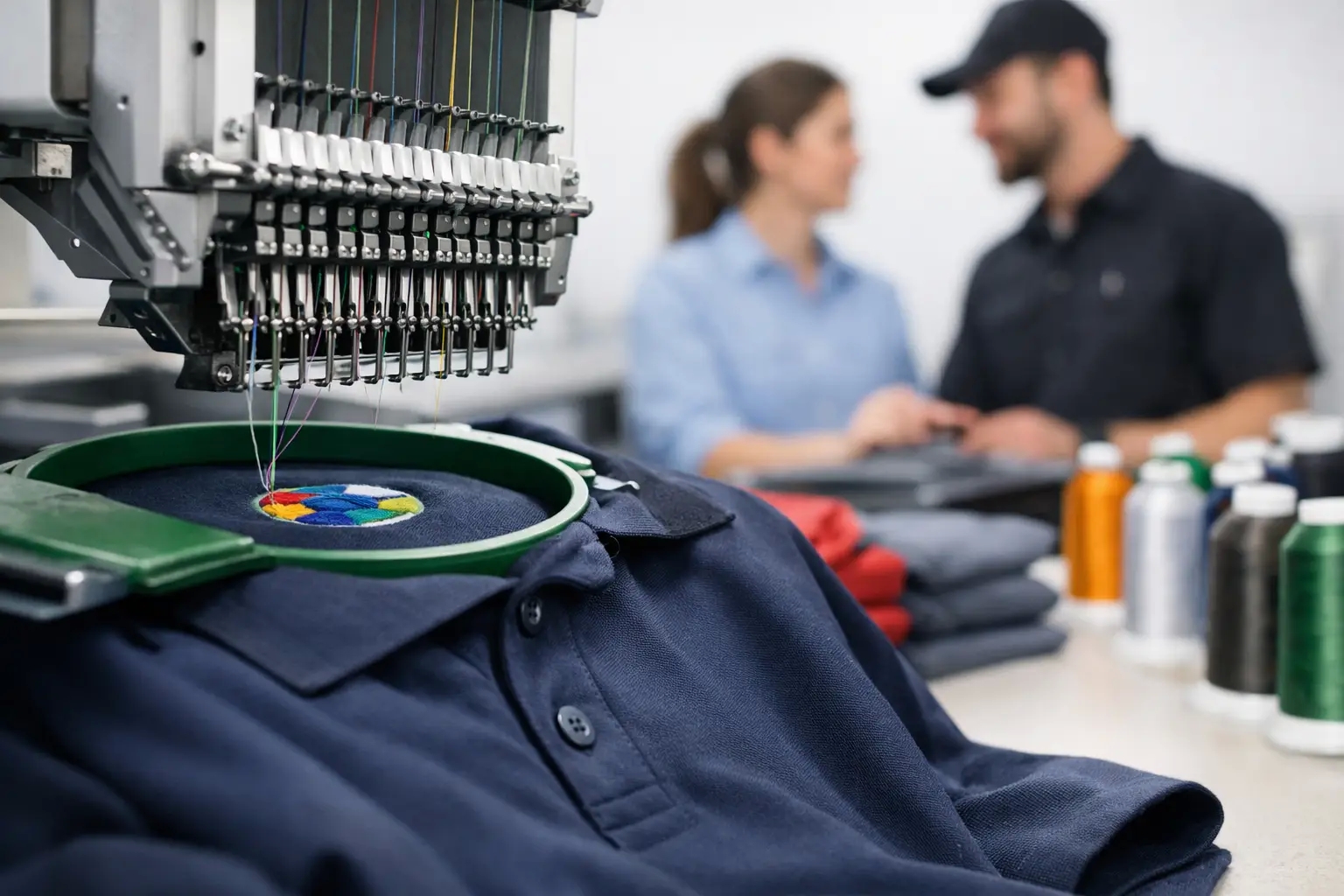
A production-ready embroidery file is different from a standard image file. The logo must be digitized so the embroidery equipment knows stitch direction, density, sequence, and thread changes. Digitizing is not merely converting a file format. It is the process that determines whether the finished logo lies flat, holds its shape, and remains legible on the selected fabric.
Send the cleanest version of your artwork available, preferably a vector logo or a high-resolution file. Include brand color references if exact thread matching is a concern. Thread colors are close visual matches, but they can look different on navy, black, gray, khaki, or fluorescent garments. A proof or sew-out is especially useful for first-time orders and for logos with multiple colors.
Choose Placement for Function and Consistency
The left chest is the standard location for most company logos because it is visible, professional, and practical across shirts, polos, jackets, and outerwear. It also makes reordering easier because the placement remains consistent when employees move between garment styles.
That standard does not fit every job. A full chest logo can work well on a heavyweight hoodie or work jacket. A sleeve logo may be appropriate for security teams, dealership uniforms(https://www.awawork.com/audi.html), public-facing crews, or organizations that need a primary logo on the chest and a department mark on the arm. Back embroidery is more visible at a distance, but it can add cost and may not be appropriate for garments worn under outerwear.
Name embroidery is often placed on the right chest, opposite the company logo. This works well for mechanics, hospitality teams, healthcare staff, service technicians, and customer-facing employees. Keep names readable and consistent. Decide early whether names will use first name only, first and last name, job title, or a combination. Changing that policy from one order to the next makes a uniform program look uneven.
Before approving placement, consider pockets, pen slots, seams, zippers, insulation, and reflective trim. A logo that sits well on a pocketless polo may not work on a work shirt with chest pockets. Outerwear also needs review because embroidery through insulated layers can affect the appearance of both the logo and the garment.
Match Thread, Backing, and Garment Material
Fabric affects embroidery more than many buyers expect. Stable woven work shirts generally handle detailed logos well. Stretch polos, lightweight performance fabrics, fleece, and insulated jackets may need adjusted stitch settings or backing to prevent puckering, distortion, or excessive pull.
Backing supports the embroidery on the inside of the garment. It helps the logo hold its shape, particularly on knit fabrics and lightweight materials. The right backing is a production decision, but buyers should understand the trade-off: more support can improve logo quality, while heavier construction may feel more noticeable inside a lightweight shirt.
Thread selection should match both the logo and the work environment. Standard embroidery thread is suitable for many uniform programs. For FR apparel, use decoration methods and materials appropriate for the garment and the workplace's protective requirements. For food service, healthcare, and other high-laundering environments, select garments and decoration methods that can withstand the expected wash process.
Do not use embroidery as a workaround for a garment that is not suited to the job. A sharp logo cannot make a lightweight polo appropriate for a rough shop floor, and it cannot replace compliant FR or hi-vis apparel where those requirements apply.
Build an Order Process That Reorders Easily
A uniform program becomes expensive when every order starts from scratch. Establish a clear decoration standard for each role: approved garment styles, colors, logo size, thread colors, placement, name format, and any department or location identifiers.
For organizations with multiple departments, use a simple matrix. For example, office staff may wear embroidered polos and soft shell jackets, technicians may wear branded work shirts and coveralls, and supervisors may have outerwear with a larger chest logo. This keeps the overall appearance consistent without forcing every employee into the same garment.
Order quantities also affect cost and efficiency. Combining needs across departments or seasonal hires can reduce repeated setup work and help maintain consistent decoration. At the same time, avoid ordering too far ahead if turnover is high or if employee names are included. Blank stock or logo-only garments can be more flexible for future staffing changes.
Before submitting an order, confirm garment color, sizes, logo location, thread colors, spelling, and quantities. For name embroidery, provide a final roster in the exact format you want stitched. One missed letter is not a minor issue once the garment has been embroidered.
Common Embroidery Problems to Prevent
Most embroidery issues can be avoided before production. Small lettering is one of the most common concerns. If a tagline or phone number cannot be read from a normal distance, it may not belong on a chest logo. Use the company name or a simplified logo instead.
Another issue is poor contrast. Dark thread on a dark garment and light thread on a light garment can make even a well-digitized logo look weak. When teams wear multiple garment colors, determine whether one thread palette works across all items or whether approved color variations are needed.
Finally, do not assume every item in a catalog can be embroidered in the same location. Pocket construction, waterproof membranes, quilted linings, and reflective striping can limit placement options. Review each garment style before applying a standard decoration layout.
Custom Uniform Embroidery Guide for First Orders
For a first order, start with a focused group of garments rather than trying to decorate every possible item. Select the core pieces employees wear most often, approve artwork and placement, then build outward into jackets, caps, outerwear, and seasonal layers.
American Work Apparel can help buyers align recognized workwear brands with job-specific uniform needs, whether the order calls for industrial shirts, FR garments, dealership apparel, chef uniforms, scrubs, or branded outerwear. The best result comes from treating embroidery as part of the uniform specification, not as a final add-on.
A uniform should identify your team without getting in the way of the work. When the garment is right, the logo is readable, and the ordering standard is documented, each reorder becomes simpler and every employee presents a consistent, work-ready appearance.
Fabric Colors: Every effort is made to display fabric colors as accurately as possible. However, exact color matches cannot be guaranteed. When an exact match is required, we strongly recommend purchasing a physical color sample. Due to variations in monitor settings - including brightness, contrast, and color calibration - actual item colors may differ from what you see on your screen.
Country of Origin: Imported, Unless Otherwise Noted.
 Search
 BE THE FIRST TO KNOW
Enter your email address to receive monthly speical offers and discounts delievered right to your inbox!
Privacy Policy