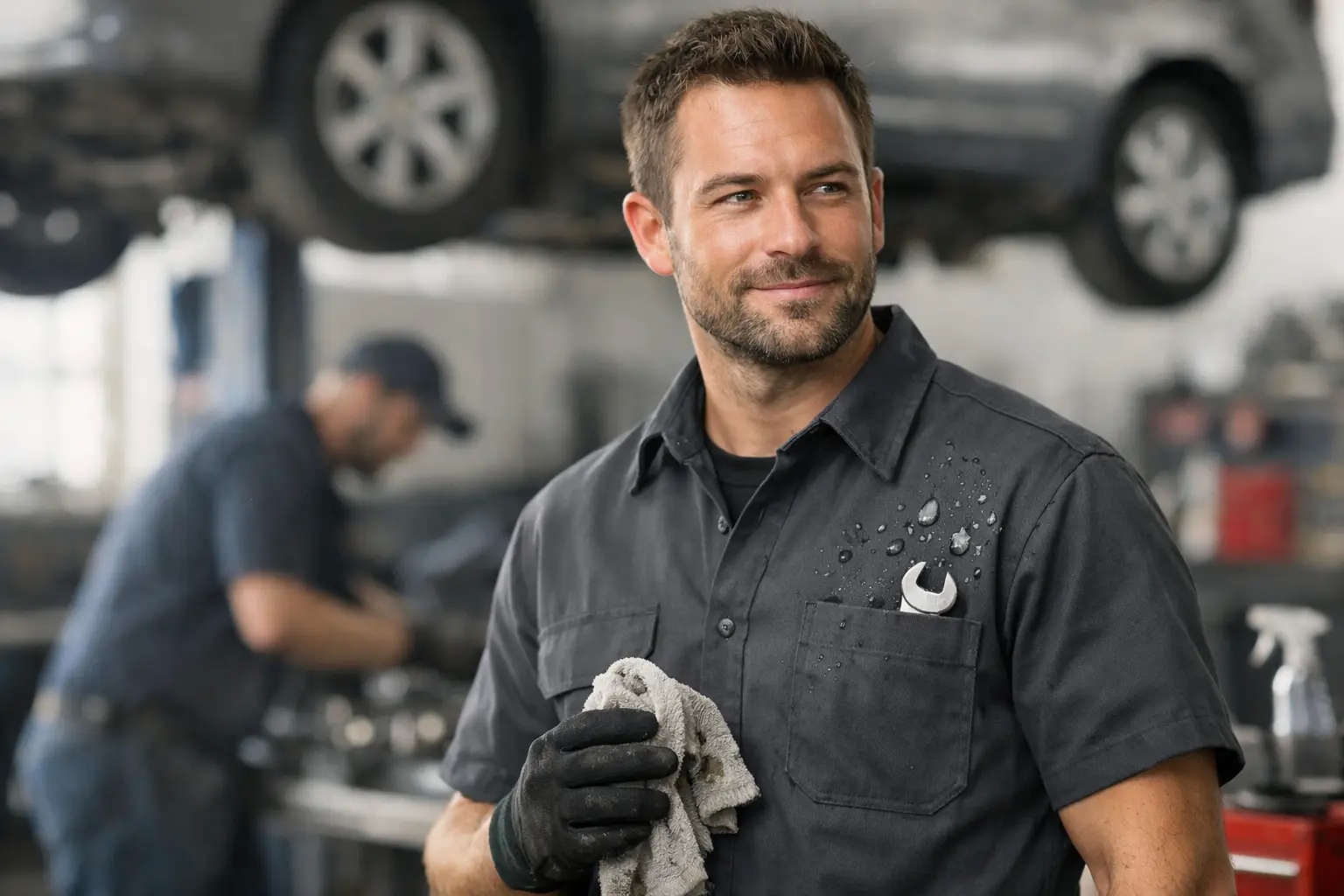
Mechanic Shirts Stain Resistant Buying Guide
A shirt can look worn out long before the fabric actually fails. In an automotive shop, that usually comes down to oil, grease, brake dust, coolant, and general grime setting into the fabric after repeated washes. That is why mechanic shirts stain resistant enough for daily service work are not just a cosmetic choice. They help crews look more consistent, reduce replacement frequency, and make uniform programs easier to manage.
For shop owners, service managers, and buyers, the right shirt has to do more than come clean. It has to hold up to movement, repeated industrial laundering, name patches, and long hours in bays that run hot, dirty, and fast. For individual technicians, it needs to stay comfortable without looking sloppy by mid-shift. The best choice usually comes down to fabric, finish, construction, and the type of work being done.
What stain resistance really means in a mechanic shirt
Stain resistance is often misunderstood. It does not mean a shirt will never stain. It means the fabric is better equipped to release soils during washing and less likely to absorb common shop contaminants deep into the fibers.
That distinction matters. Motor oil, grease, transmission fluid, and shop chemicals behave differently on fabric. Some sit on the surface for a while. Others penetrate quickly, especially on lightweight or highly absorbent materials. A stain-resistant finish gives the shirt a better chance of looking presentable after laundering, but it is not a substitute for proper wash cycles or for choosing the right fabric blend in the first place.
In practical terms, a good mechanic shirt should resist visible buildup, wash cleaner than a standard casual work shirt, and keep its color and professional appearance over time. If a product claims stain resistance but loses that performance after a short wear cycle, it is not delivering much value.
Why mechanic shirts stain resistant options matter for uniform programs
In a shop environment, appearance affects more than first impressions. Clean, consistent uniforms support customer-facing roles, dealership standards, and team accountability. They also reduce the mismatch that happens when some employees wear faded, stained shirts while others are in newer replacements.
For businesses buying in volume, stain-resistant shirts can lower churn in the uniform cycle. Shirts that release grease and dirt more effectively tend to stay in service longer before they need replacement for appearance reasons alone. That can improve cost control, especially when outfitting multiple technicians, service advisors, lot staff, or support personnel across locations.
There is also a practical benefit for reordering. If you standardize around a recognized workwear brand and a shirt designed for automotive or industrial service, sizing, color continuity, and customization are usually easier to manage over time.
Fabric blend is the first thing to check
If stain resistance is a priority, fabric composition deserves more attention than marketing language. In most mechanic shirt categories, polyester-cotton blends remain the standard because they balance durability, color retention, and soil release better than many all-cotton options.
Polyester helps with wrinkle resistance and often improves the shirt's ability to release stains in laundering. Cotton adds comfort and breathability, which matters in hot bays and active service work. A balanced blend often gives the best result for everyday automotive use.
All-cotton shirts can feel comfortable, but they may absorb oils more readily and show wear differently over time. They can still be a good fit in some environments, especially where comfort is the top priority, but they are not always the strongest option for visible stain control. On the other side, a fabric with too much synthetic content may feel less breathable or less comfortable during long shifts.
That trade-off is why many buyers stick with proven work shirt constructions from established uniform brands rather than experimenting with fashion workwear that looks right on a hanger but performs poorly in a shop.
Soil-release finishes and what to expect
Many stain-resistant mechanic shirts rely on a soil-release treatment in addition to the fabric blend. This treatment helps contaminants wash out more effectively instead of bonding to the fibers.
This is useful, but expectations should stay realistic. No finish can fully prevent every stain, especially when fluid sits for hours or when laundering is delayed. Repeated exposure to heavy grease, solvents, or harsh wash conditions can also reduce the long-term benefit of some finishes.
For that reason, buyers should think about stain resistance as one part of garment performance, not the whole story. A shirt with a strong fabric blend, good colorfastness, and dependable construction often outperforms a shirt that markets one feature aggressively but falls short on overall durability.
Construction details that help shirts last longer
A stain-resistant shirt still needs to survive the job. In automotive service, the points of failure are usually not dramatic. They show up as frayed cuffs, popped seams, curling collars, fading panels, and pocket areas that wear out early.
Look closely at seam construction, button quality, pocket layout, and reinforcement in high-stress areas. Industrial-grade shirt designs tend to hold shape better after repeated laundering. That matters because a shirt that cleans up well but loses structure quickly will still need replacement.
Fit also plays a role. Shirts that are too slim for the work environment can strain across the back and shoulders during reaching, lifting, and overhead movement. Shirts that are too loose can catch, bunch, and wear unevenly. A classic work shirt fit usually performs better than a retail casual fit in service settings.
Matching the shirt to the job
Not every mechanic needs the same shirt. General automotive repair, dealership service lanes, fleet maintenance, diesel work, body shops, and industrial maintenance all create different wear patterns.
For customer-facing dealership teams, cleaner appearance and brand presentation may carry more weight. In that case, a stain-resistant button-front work shirt in a consistent color program, with embroidered names or company branding, often makes sense. For heavy-duty diesel or industrial maintenance, durability and laundering performance may outweigh a polished look.
Climate matters too. In hotter regions or warm indoor shops, lighter-weight poplin blends can improve comfort. In cooler shops or mixed indoor-outdoor work, heavier twill constructions may hold up better and maintain a more structured appearance. Neither is automatically better. It depends on how the team works and how the garments are washed.
When flame resistance changes the decision
Some buyers search for stain resistance first, then realize the job actually requires flame-resistant apparel. If technicians are exposed to flash fire, arc flash, combustible materials, or specific industrial hazards, compliance and protection come before appearance features.
In those cases, the correct path is to shop within FR categories and confirm the garment meets the required standard for the job. Some FR shirts offer practical features that support professional appearance and durability, but the buying decision has to start with hazard assessment, not just soil release.
This is a common point where a specialized supplier is useful. Businesses that outfit mixed teams often need standard mechanic shirts for some roles and FR garments for others, while still keeping a consistent uniform program.
Buying for one technician versus buying for a team
An individual buyer can focus on personal comfort, preferred fit, and how the shirt feels across a full shift. A business buyer has a wider checklist. That includes size range, color consistency, brand reliability, customization options, reorder availability, and total delivered cost.
That is why the cheapest shirt is rarely the best value. If it stains permanently after a few weeks, shrinks unpredictably, or gets discontinued during a reorder cycle, the savings disappear. For team purchasing, dependable availability is part of the product value.
Recognized workwear brands tend to be stronger here because they are built around repeat purchasing and category consistency. For operations that need embroidered logos, employee names, or emblems, starting with a shirt platform known for uniform use also reduces friction.
How to judge value before you buy
A good stain-resistant mechanic shirt should answer a few basic questions clearly. What is the fabric blend? Is it built for industrial wash or home wash? Does the product come from a brand with a track record in automotive or industrial uniforms? Will the color and style still be available when it is time to reorder?
If those answers are vague, the product may be aimed more at casual workwear than uniform performance. For serious shop use, buyers should prioritize proven construction and serviceability over trend-driven details.
American Work Apparel serves buyers who need that kind of practical consistency across brands, categories, and job functions. Whether the purchase is for one replacement shirt or a larger team rollout, the goal is the same - workwear that holds up, looks right, and supports the job without creating extra management problems.
The right shirt will not make a dirty job clean, but it can make the uniform program easier to run and the workday easier to wear. When a mechanic shirt resists stains, launders well, and stays presentable longer, it earns its place in the rotation.
Fabric Colors: Every effort is made to display fabric colors as accurately as possible. However, exact color matches cannot be guaranteed. When an exact match is required, we strongly recommend purchasing a physical color sample. Due to variations in monitor settings - including brightness, contrast, and color calibration - actual item colors may differ from what you see on your screen.
Country of Origin: Imported, Unless Otherwise Noted.
 Search
 BE THE FIRST TO KNOW
Enter your email address to receive monthly speical offers and discounts delievered right to your inbox!
Privacy Policy